



Prêt à transformer votre e-commerce ?
Prenez rendez-vous avec l'un de nos experts en social commerce pour en savoir plus.


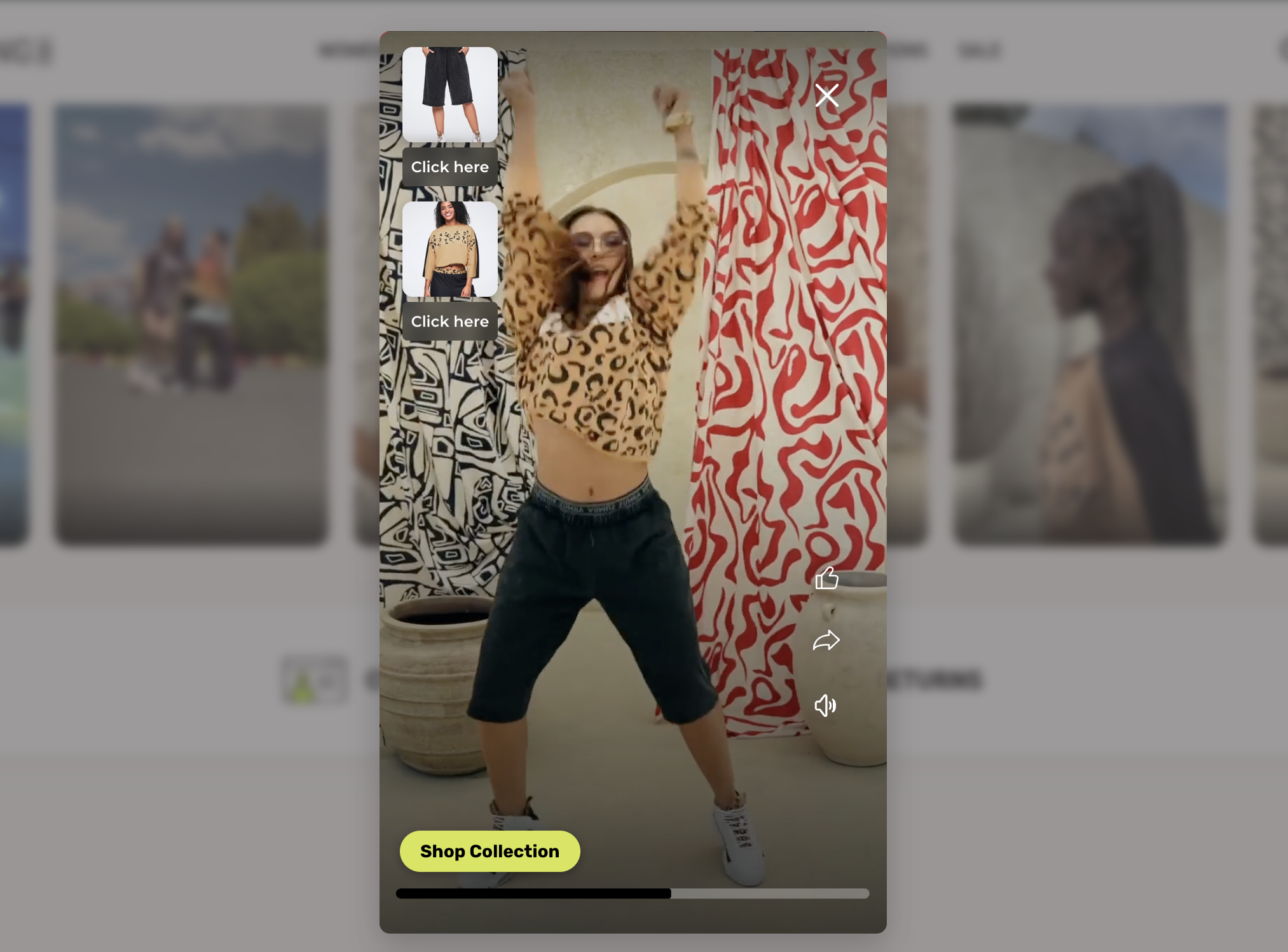
The digital landscape has shifted from "search and find" to "watch and buy." As of 2026, global livestream and interactive video sales have crossed the $1 trillion mark, according to latest Statista projections. This growth is driven by a fundamental change in consumer behavior: shoppers no longer want to navigate away from a video to find a product link. They expect the video itself to be the point of sale.
Research from Google Ads management services indicates that shoppable videos drive 28 percent higher conversion rates than standard video assets. By removing the friction between discovery and checkout, brands are turning passive viewers into active customers in a matter of seconds. For e-commerce managers, the challenge is no longer whether to use video, but how to structure it for maximum ROI.
The following examples demonstrate how diverse industries - from beauty to automotive - are leveraging interactivity to shorten the sales funnel.
Sephora has perfected the art of turning high-production campaign content into interactive web experiences. By hosting shoppable videos directly on their site, they allow viewers to click on specific makeup products as they appear on screen. This approach allows users to explore shade details and add items to their cart without pausing the playback.
According to case studies from Smartzer, this interactive layer helped Sephora achieve an engagement rate of nearly 50 percent. This proves that when users are given the tools to interact, they cease being passive observers.
ASOS focuses on utility through tutorial-style videos. Instead of a traditional "sales pitch," their content feels like a styling session with a friend. For instance, a single video might demonstrate six different ways to style a leather jacket.
The interactivity allows viewers to toggle between the various items shown - cargo pants, boots, or accessories - and see real-time pricing. This strategy addresses the "how do I wear this?" hurdle, which is a major friction point in fashion e-commerce.
IKEA uses a narrative approach called "Bedroom Habitats," where everyday scenes are turned into interactive shopping environments. By using 360-degree video and clickable hotspots, IKEA allows users to explore a fully furnished room.
This is particularly effective for furniture brands because it provides context. A viewer isn't just looking at a lamp; they are seeing how that lamp interacts with a specific nightstand and bedding set. This "contextual commerce" often leads to higher average order values (AOV) as customers are inspired to buy the entire "look" rather than a single item.
Shoppable video isn't just for low-ticket impulse buys. MINI has utilized interactive video to let prospective buyers explore vehicle features. Users can click on hotspots to learn about the engine, interior technology, or safety features.
While the goal isn't an immediate "buy now" for a car, the interactive elements drive deeper engagement and product education. For high-value industries, shoppable video serves as a powerful lead-generation tool that qualifies the buyer before they ever set foot in a dealership.
The collaboration between Adidas and Missoni highlights the power of brevity. These videos are often under 60 seconds long but focus intensely on textures and patterns. By adding a simple "Shop Now" overlay, the brands capitalize on the aesthetic "wow" factor.
Wyzowl's 2026 Video Marketing Report notes that 91 percent of businesses now use video marketing, but the highest ROI often comes from these "snackable" formats that lead directly to a product page.
French Connection has integrated live commerce as a permanent sales channel. During scheduled live events, hosts showcase products in real time and answer viewer questions via chat.
The "live" aspect adds a layer of urgency and community that recorded video cannot replicate. By displaying the product catalog alongside the live feed, French Connection enables instant checkout, capturing the "fear of missing out" (FOMO) that drives rapid conversions.
Skincare brand ZAILA uses beauty influencers to demonstrate product application in short, shoppable clips. This "proof of concept" is vital for skincare, where buyers are often skeptical of claims.
By showing the product being applied to real skin and providing a click-to-cart point immediately, ZAILA builds trust and facilitates an immediate purchase. Data from HubSpot's 2026 State of Marketing Report confirms that social proof and demos remain the top drivers for B2C conversion.
To replicate the success of these brands, your technical implementation must be seamless. Here are three core pillars for your 2026 video strategy:
Using an AI-powered brand intelligence hub can help you determine which products are most likely to convert for specific user personas. AI can analyze your existing website tone and product catalog to suggest the best video concepts.
While TikTok and Instagram are great for reach, hosting shoppable content directly on your site via a Shopify App for Shoppable Video ensures you retain the customer data. This allows for better retargeting and a more branded checkout experience.
Most shoppable video consumption happens on mobile devices. Ensure that your interactive tags and "Shop Now" buttons are large enough for thumb-clicks and that the video player loads quickly. According to Wistia, videos under one minute see an average engagement rate of 50 percent, so keep your on-site clips concise.
A standard video ad usually requires a user to click a link that takes them to a new landing page. A shoppable video allows the user to interact with products within the video player itself, often adding items to a cart without leaving the content.
No. While brands like Sephora use high-production sets, many successful brands use user-generated content (UGC) or simple smartphone-filmed demos. The key is the interactive layer that makes the content actionable.
You can implement shoppable video on social platforms like TikTok Shop, Instagram, and YouTube. However, for maximum conversion on your own store, using dedicated software to embed interactive videos on product pages is recommended.
Video content increases "dwell time" on your site, which is a positive signal for search engines. Additionally, using proper schema markup for your videos can help them appear in Google's "Video" search results and AI-generated overviews.
Approuvé par les plus grandes marques





















Prenez rendez-vous avec l'un de nos experts en social commerce pour en savoir plus.