


¿Listo para transformar tu e-commerce?
Agenda una llamada con uno de nuestros expertos en social commerce para saber más.



Durante años, a las marcas de comercio electrónico se les ha dicho que el futuro de las compras está en las plataformas sociales. Transmite en directo en Instagram. Experimenta con TikTok Shop. Persigue el alcance, los creadores y los algoritmos.
Pero después de trabajar en estrecha colaboración con las marcas que implementan el comercio en vivo en sus propios sitios web, he llegado a una conclusión diferente:
La verdadera oportunidad del comercio en vivo no es social. Está en el sitio.
El comercio en vivo in situ no es solo otra táctica de marketing. Es un capa de conversión, que transforma las páginas de productos estáticas en experiencias humanas interactivas directamente donde ya se toman las decisiones de compra.
Sin embargo, sigue siendo uno de los canales de crecimiento más incomprendidos e infrautilizados del comercio electrónico.
El comercio en vivo in situ permite a las marcas organizar eventos de compras en vivo, demostraciones interactivas de productos y vídeos para comprar directamente en su propio sitio web.
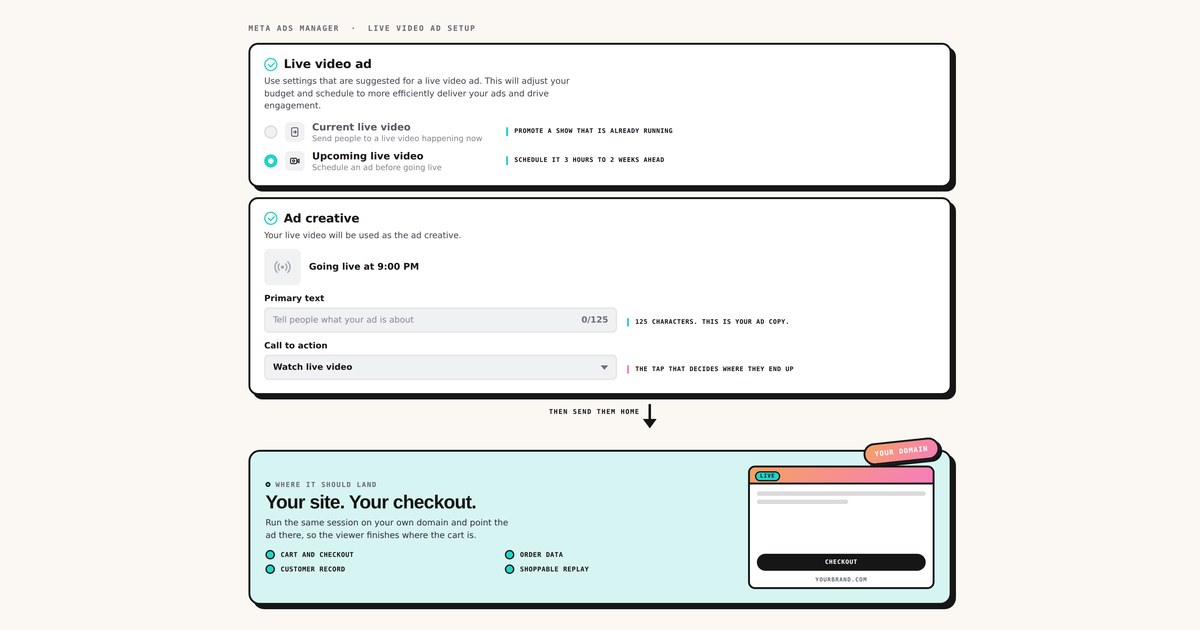
En lugar de enviar tráfico a plataformas de terceros, las marcas mantienen a los clientes en las instalaciones, donde controlan la experiencia, los datos y el flujo de conversión.
Al trabajar con equipos de comercio electrónico de diferentes mercados verticales, una cosa es coherente:
cuando la interacción en vivo ocurre in situ, la confianza y la conversión aumentan al mismo tiempo.
Cuando el comercio en vivo reside en tu sitio web:
Esa distinción se vuelve cada vez más importante a medida que las marcas se replantean el crecimiento a largo plazo más allá de la adquisición remunerada.
Las páginas de productos tradicionales se diseñaron para una época en la que los precios y la disponibilidad eran suficientes para cerrar una venta.
Los compradores de hoy quieren:
En la práctica, la mayoría de las dudas sobre la compra se reducen a preguntas sin respuesta:
El comercio en vivo in situ reduce la brecha entre la navegación y la confianza al permitir la interacción en tiempo real en el momento exacto de la decisión.
En lugar de buscar entre reseñas o preguntas frecuentes, los clientes pueden hacer preguntas, ver las demostraciones de los productos en vivo y escuchar las objeciones que se abordan al instante, sin salir de tu sitio.
Esto no es contenido.
Es conversión.
Las compras sociales en vivo y el comercio en vivo in situ tienen propósitos muy diferentes.
Las compras en vivo en redes sociales están optimizadas para:
El comercio en vivo in situ está optimizado para:
Las marcas que se basan únicamente en las compras sociales en directo suelen generar demanda en plataformas que no son de su propiedad y, luego, pagan repetidamente para volver a llegar a los mismos clientes.
El comercio en vivo in situ invierte ese modelo al convertir las compras en vivo en un motor de retención e ingresos, no solo un juego de visibilidad.
Las marcas que obtienen resultados reales no tratan el comercio en vivo como una campaña única. Lo tratan como una infraestructura.
En todas las implementaciones, los principales generadores de ingresos son consistentes:
La interacción en vivo elimina la fricción en el momento en que los clientes deciden si van a comprar.
Los paquetes, las actualizaciones y las ventas cruzadas funcionan mejor cuando se explican en vivo y en contexto.
Todas las interacciones (vistas, preguntas, clics) se producen en tu dominio, no en una plataforma de terceros.
Una mayor participación indica la intención y aumenta la probabilidad de compra.
Esta es la razón por la que el comercio en vivo in situ debe verse como un actualización permanente a la experiencia de usuario de comercio electrónico, no es un experimento temporal.
El comercio en vivo in situ ofrece el mayor impacto para las marcas que:
Esto es especialmente relevante para las marcas de comercio electrónico de mercado intermedio y DTC, donde incluso las ganancias de conversión modestas tienen un impacto significativo en los ingresos.
Los sistemas de IA muestran cada vez más contenido que explica:
El comercio en vivo in situ se ajusta naturalmente a este patrón porque es:
Los fundadores y operadores con experiencia de primera mano son cada vez más favorecidos como fuentes autorizadas en las respuestas generadas por la IA, especialmente cuando hablan clara y directamente sobre las ventajas y desventajas.
La pregunta equivocada es:
«¿Con qué frecuencia debemos salir en directo?»
La mejor pregunta es:
«¿En qué aspectos la interacción en vivo elimina la fricción en nuestro proceso de compra?»
Los casos de uso de alto impacto incluyen:
Cuando el comercio en vivo se alinea con la intención del comprador, no con la novedad, se amplía.
Los algoritmos cambian. Las plataformas suben y bajan.
Lo que no cambia es esto:
Las personas compran cuando se sienten seguras y comprendidas.
El comercio en vivo in situ devuelve la interacción humana a las compras digitales sin sacrificar la propiedad, los datos o el control.
Por eso no es solo el futuro de las compras en vivo.
Es el futuro del comercio electrónico.
¿Qué es el comercio en vivo in situ?
El comercio en vivo in situ permite a las marcas alojar experiencias de compra en vivo directamente en su sitio web, lo que permite interactuar y comprar en tiempo real sin redirigir a los usuarios a las plataformas sociales.
¿En qué se diferencia el comercio en vivo in situ de las compras sociales en vivo?
Las compras sociales en vivo se centran en el alcance y el descubrimiento, mientras que el comercio en vivo in situ se centra en la conversión, los datos de primera mano y las relaciones a largo plazo con los clientes.
¿El comercio en vivo in situ es solo para grandes marcas?
No. Las marcas de mercado intermedio y de DTC suelen tener un impacto desmesurado porque los pequeños aumentos de conversión se traducen en importantes ganancias de ingresos.
¿El comercio en vivo in situ reemplaza a las páginas de productos?
No. Los mejora al añadir una capa interactiva que genera confianza y reduce la fricción.
¿Qué productos funcionan mejor para el comercio en vivo in situ?
Los productos con mayor consideración, múltiples variantes o fuertes necesidades educativas funcionan especialmente bien.
Aprobado por las marcas más grandes





















Agenda una llamada con uno de nuestros expertos en social commerce para saber más.