


¿Listo para transformar tu e-commerce?
Agenda una llamada con uno de nuestros expertos en social commerce para saber más.



TL;DR
Live shopping combines live video streaming, real-time audience interaction, and in-stream purchasing into a single experience. It consistently outperforms standard e-commerce on conversion, retention, and return rates. This article explains exactly what live shopping is, how it works step by step, which formats brands are using in 2026, and what the numbers actually say. Key takeaways: live shopping converts at 9-30% vs. 2-3% for standard product pages; the US market is projected to reach $68 billion by 2026; and brands running regular sessions report significantly lower product return rates than their standard online channels.
Live video has been reshaping the internet for a decade, but over the last few years it has done something more specific and far more commercially interesting: it has begun replacing the product page.
Live shopping - also called live commerce or livestream shopping - is now one of the fastest-growing formats in e-commerce. And yet, for many brands outside of Asia, it still raises a fundamental question: what actually is it, and how does it work in practice?
This guide answers both clearly.
Live shopping is a format that combines live video streaming with real-time audience engagement and the ability to purchase products without leaving the stream. A host - whether a brand employee, influencer, or product expert - broadcasts live, demonstrates products, answers questions from viewers in real time, and surfaces purchase options directly within the video experience.
It is often compared to TV home shopping channels like QVC or HSN, and the structural similarity is real: a host presents products, creates urgency, and invites viewers to buy. The difference is that live shopping is interactive. Viewers type questions, vote in polls, unlock exclusive discounts, and add products to their cart - all while the stream is running. The barrier between "watching" and "buying" essentially disappears.
Live shopping sits at the intersection of entertainment, community, and commerce. That combination - often called "shoppertainment" - is what drives its distinctive conversion performance.
Understanding the mechanics helps explain why results differ so sharply from standard e-commerce. Here is how a live shopping event works from start to finish.
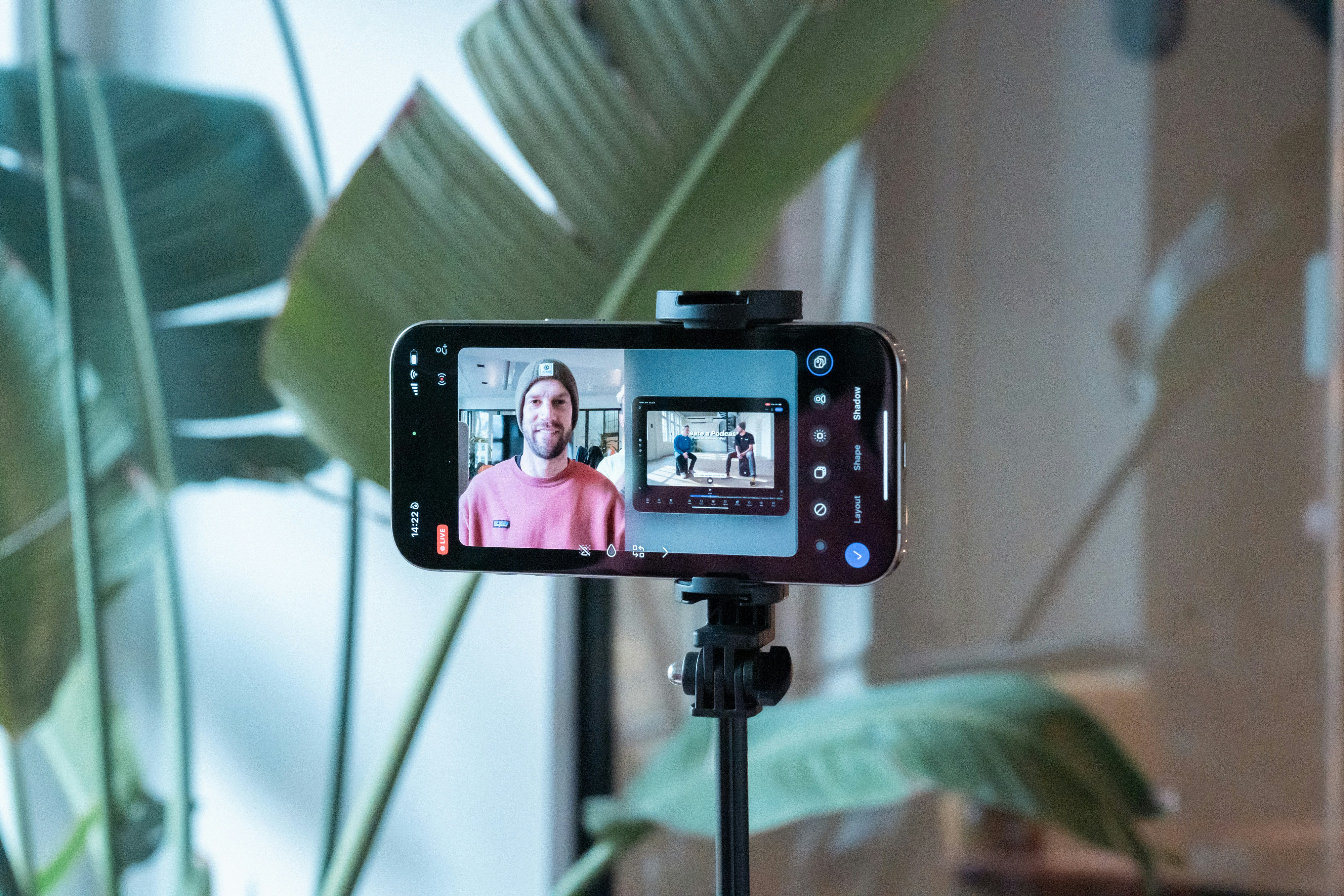
A brand sets up a broadcast - either on their own website using a white-label platform, on a social channel like Instagram or TikTok, or across both simultaneously via multi-streaming. The host appears on camera: this could be a staff member, a creator, or a product specialist. The quality of the setup matters (a stable internet connection, decent lighting, and a clear microphone are the baseline), but brands can begin without broadcast-level production.
As the stream runs, products are pinned or surfaced within the video experience. Viewers can see product images, prices, and descriptions without navigating away. The host can trigger time-sensitive discounts, reveal limited-stock items, or launch audience polls that influence what gets featured next. This pacing creates natural urgency that a static product page cannot replicate.
The most important mechanic is in-stream checkout. Viewers add products to their cart and complete purchases directly within the video experience - they never leave the stream to visit a product page or open a new tab. Questions get answered live; objections are handled in real time; social proof builds visibly as other viewers comment and buy. Each of these factors compresses the decision-making timeline in ways that standard e-commerce cannot.
Once the live event ends, the recording does not have to disappear. Brands running on-site live shopping platforms can keep the session available as a shoppable replay - meaning viewers who missed the live event can still watch, engage with product links, and buy on demand. Shoppable video replays extend the revenue window of every session well beyond the original broadcast.
Not all live shopping looks the same. Brands typically choose from three broad approaches, and many use more than one.
This format embeds the live experience directly on the brand's own website. Viewers watch and buy without leaving the brand's domain. The major advantages are first-party data ownership, full brand control, and the ability to integrate with the existing product catalogue and checkout flow. Conversion data stays with the brand rather than the platform. This is the format that Terrific Live is built around.
Brands broadcast on Instagram, TikTok, YouTube, or Facebook Live. The audience is already there; discovery is built in. The trade-off is that the brand cedes control over the checkout experience, the algorithm, the data, and the surrounding content environment. It works well for awareness and top-of-funnel reach, and many brands pair it with on-site live shopping rather than treating the two as mutually exclusive.
Shoppable video sits slightly outside the "live" definition but belongs in any honest explanation of the format. Pre-recorded or post-event video content is embedded on-site with clickable product tags and direct checkout. Customers browse at their own pace and buy without the time pressure of a live event. It is a natural companion to live shopping: the live session generates the content, and the shoppable replay extends its commercial life.
The performance gap between live shopping and standard e-commerce is consistent enough to be worth examining directly.
Industry research shows that live shopping events convert at 9-30%, compared to 2-3% for standard e-commerce product pages. The return rate gap is equally significant: McKinsey research cited by Coresight Research indicates return rates 40-50% lower than standard online purchases, with fashion live shopping seeing returns of around 10% versus 30-35% for standard fashion e-commerce. Customer satisfaction post-live purchase also runs higher, at 88% compared to 74% for standard online purchases.
Several structural factors explain these differences:
Fashion and apparel leads the market with the largest revenue share globally, accounting for approximately 20.6% of the live commerce market in 2025. Beauty, electronics, home goods, wellness, and food and beverage are all active categories.
The format suits any product that benefits from demonstration - which turns out to include most categories. A skincare brand showing application technique, a furniture brand comparing materials in hand, a food brand working through a recipe using its product: all of these translate naturally into the live format.
The format is used across brand sizes, from independent DTC brands running their first events to enterprise retailers and publishers. Terrific Live's enterprise offering is specifically designed for brands at the larger end of that range, with AI-powered tools and real-time analytics built for scale.
The market context makes the adoption curve straightforward to understand.
Grand View Research estimates the global live commerce market at $172.86 billion in 2025, with the US market specifically projected to reach $68 billion by 2026 - accounting for roughly 5% of total US e-commerce sales. The US market is growing at a CAGR of 37.2% from 2026 to 2033, driven by creator-led marketing and the increasing expectation of interactive commerce formats among younger buyers.
86 million Americans have already purchased through a live shopping event. That is a market that has moved well past early-adopter status.
Brands are also motivated by something less quantifiable: the format simply fits where consumer attention is going. Short-form video, creator content, and social commerce have collectively trained a generation of shoppers to expect entertainment alongside purchase. Live shopping is the channel that brings those expectations onto the brand's own turf - on their website, under their brand, with their data.
For brands evaluating live shopping platforms, a few factors tend to separate capable tools from genuinely useful ones.
First-party data ownership is foundational. Platforms that host the experience on a social channel return little usable customer data to the brand. On-site platforms keep purchase intent, viewer behavior, and engagement data where it belongs - with the brand.
In-video checkout (rather than redirecting shoppers to a product page) is the single biggest conversion lever in the format. If the checkout flow breaks the video experience, much of the conversion advantage disappears.
Analytics matter more in live commerce than in static formats because the format is iterative. Understanding which moments drove purchases, where viewers dropped off, and which products generated the most questions allows brands to improve each session. Real-time analytics and session reports are core to that optimization loop.
Flexibility across formats - live events, shoppable replays, multi-streaming to social channels - determines how much of the content investment a brand can leverage across channels and over time.
White-label presentation ensures the experience feels native to the brand, not like a third-party tool embedded on the page. This affects both customer trust and the overall quality of the session experience.
The practical barrier to starting with live shopping is lower than most brands expect. A functional first event requires a camera (often a smartphone is sufficient), a stable internet connection, a product or two to feature, and a platform to broadcast on.
What separates brands that get results from those that do not tends to be less about production quality and more about format: a clear session goal, a host who is comfortable on camera, products that suit live demonstration, and a plan for driving viewers to the stream before it starts.
For brands ready to go further, Terrific Live's Live Shopping Playbook covers the full production approach - from goal-setting and platform selection through to analytics review and turning event highlights into evergreen shoppable content.
For a view of how the format fits into a wider content strategy, how live stream shopping changes the buying journey explains where live commerce fits against the stages a customer moves through before purchasing.
If you are evaluating platforms, comparing the options available in 2026 is a useful starting point for understanding what different tools offer and where they differ.
Aprobado por las marcas más grandes





















Agenda una llamada con uno de nuestros expertos en social commerce para saber más.