


お客様を変革する準備はできていますか ウェブサイト?
詳細については、当社の専門家との面談を予約してください。


Every DTC brand hits the same wall eventually: paid acquisition gets more expensive every quarter, and the customers it brings in don't feel anything for the brand. They bought because of a 20%-off code, and they'll leave the moment a competitor beats it. That's not a growth strategy. It's a subsidy you pay forever.
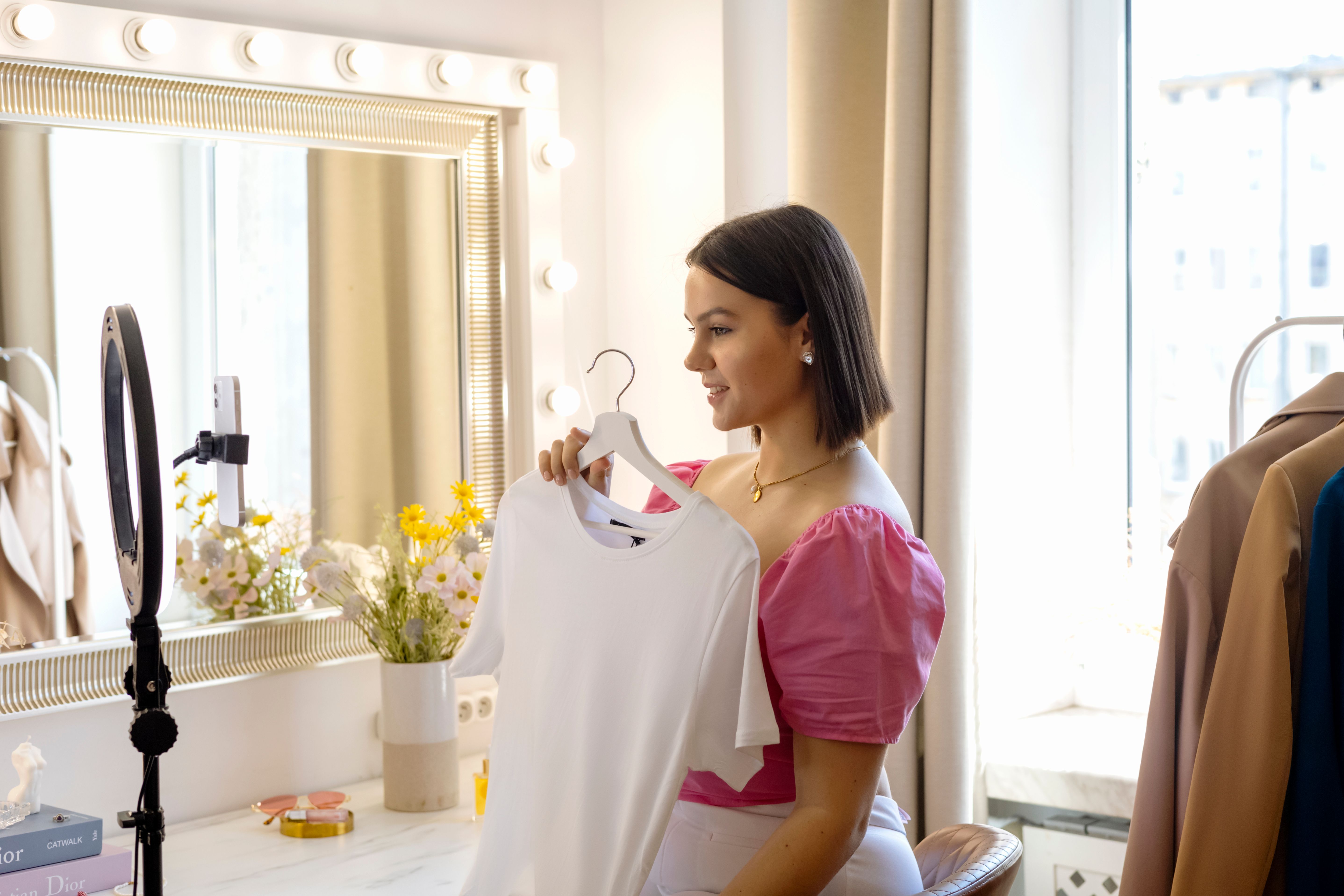
There's a cheaper lever sitting in plain sight, and most brands aren't pulling it because it requires the one thing marketing teams try hardest to avoid: putting the founder on camera, unscripted, on a schedule. This isn't about hiring the right influencer or coaching a host to be more charismatic. It's about a specific, underused asset, the founder, and why their willingness to answer a hard question live outperforms both influencer marketing and discount-driven acquisition.
Because an ad is optimized to persuade you, and everyone knows it. A founder talking about why they made a product decision, including the ones that didn't work, is optimized for nothing except being true. Audiences have gotten extremely good at detecting the difference, and the data backs that up: trust in traditional advertising sits far below trust in a person who seems to have no script.
The mechanism researchers point to is called a parasocial relationship: the one-sided but psychologically real sense of familiarity and connection a viewer builds with someone they watch regularly, even though that person doesn't know them individually. Academic research on influencer marketing consistently finds that parasocial relationships increase both trust and purchase intent, and that self-disclosure, perceived authenticity, and emotional connection are the strongest predictors of that trust (Frontiers in Communication, 2026; SSRN, Chitraju).
A founder has a structural advantage over a hired influencer here: the disclosure is real, not performed. When a founder says "we almost didn't ship this because the first version failed QA twice," that's not a brand safety risk. It's the exact kind of self-disclosure the research says builds trust fastest, and no influencer contract can manufacture it.
That advantage compounds with a broader trend. Edelman's Trust Barometer has found that a large majority of consumers trust "people like themselves" more than they trust brands or institutions speaking in a corporate voice, and a founder speaking plainly, in the first person, registers as a person, not an institution. Consumer trust in influencer content has also been rising year over year, with younger audiences now ranking creator content above search results and peer reviews as a trusted source (Amra & Elma, 2026). The market has already decided it prefers people over polish. A founder is the most credible person available to a brand, more credible than a paid creator, because there's no fee changing the incentive.
It's not a single livestream event. It's a recurring cadence: the same founder, showing up on a predictable schedule, building a relationship with the same audience over months, not a one-off launch stunt.
In one deployment we reviewed, a DTC brand based in Israel that was struggling with rising paid CAC and a customer base with no emotional connection to the brand, the founder began hosting recurring live sessions. The format was simple and repeatable:
That last point matters more than it sounds like it should. It converts viewers from an audience into participants. On Terrific, that agenda-setting loop runs through Polls and Live Chat embedded directly in the stream: viewers vote on what the founder covers next, ask questions in real time, and see their name and their question acknowledged on camera. That's a mechanic a static ad or a pre-recorded influencer post simply cannot offer.
The results from that recurring cadence were substantial:
.png)
Because a discount buys a transaction, and a founder builds a relationship. Only one of those compounds.
A discount code is a one-time argument: buy now because it's cheaper right now. It works exactly once per code, it trains customers to wait for the next one, and it erodes the price the market believes your product is worth. Every dollar of margin you give up on a discount is a dollar you'll need to give up again next quarter to convert the same customer again.
Founder-led trust doesn't have that decay curve. In the case above, the brand replaced price-based incentives with non-discount perks (invite-only access, early looks at upcoming products, a sense of belonging to something exclusive), and those perks, not price cuts, were what drove organic acquisition. Customers didn't share the brand with friends because they got 15% off. They shared it because being part of the community was the reward, and status and belonging spread faster than a coupon code ever does.
This is also why founder-led content usually outperforms even a well-run influencer program on trust. An influencer's audience trusts the influencer, and that trust is rented and shared across every brand they promote that month. A founder's audience trust accrues entirely to one brand, permanently, and every live session adds to the same relationship instead of splitting attention across a creator's other partnerships. (See Mastering the Influencer Effect for the case on hosts and influencers generally; this post is specifically about the founder.)
Start by separating "exclusivity" from "discount" in your own head, because most teams reach for a coupon by default. A non-discount perk system usually includes some combination of:
The through-line is that every perk deepens the relationship instead of discounting the product. That's the mechanism that produced the 40% repeat-purchase lift in the case above: customers came back not because the next code was better, but because the next session was.
Founder-led live shopping only compounds if it's recurring, and it only converts if the mechanics support participation and replay, which is exactly what Terrific is built for.
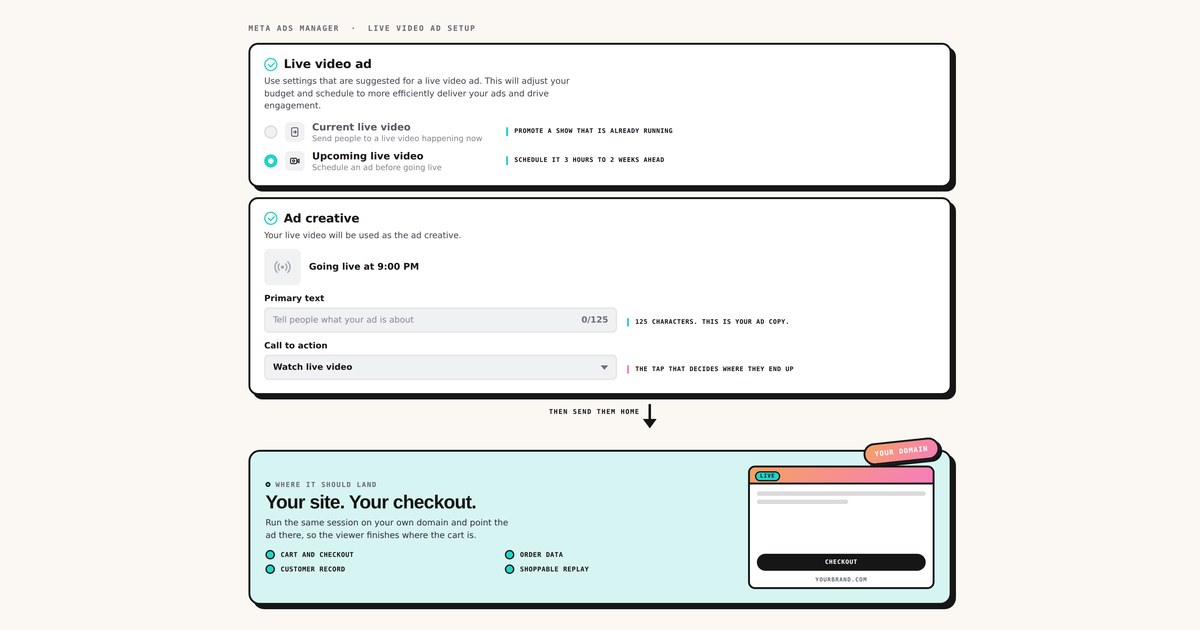
Live Shopping is where the recurring session happens, on your own domain, not rented space on a social platform where the algorithm decides who sees the founder and the platform owns the relationship data. Every session runs on your site, with in-stream checkout, so trust converts to a sale in the same moment it's built.
Polls and Live Chat are the mechanics behind the community-shaped agenda described above: viewers vote on what's next, ask questions, and get answered on camera, turning a broadcast into a two-way relationship.
A founder is almost never a professional broadcaster, and that's exactly where Live Host Co-Pilot matters most. Co-Pilot is built for a non-professional host, like a founder who has never run a live show before, keeping them on script, on time, and aware of what's happening in chat without breaking their focus on camera. It's the difference between a founder who freezes up on their first stream and one who sounds natural on their tenth.
And because a single live session only reaches whoever happens to be watching live, Timeline is what makes founder-led content compound instead of disappear. Every session becomes an always-on, scrollable replay on your site, so the origin story or product-decision moment that built trust with one viewer keeps building trust with every new visitor who scrolls past it, weeks or months later, on your domain. For the broader case on owning this channel instead of renting it, see The Rise of Brand-Owned Live Streams.
Together, that's the case for owning this channel rather than renting it: your domain, your data, your revenue, and a founder relationship that gets stronger every session instead of resetting every time you post on someone else's platform.
Ready to see it on your own site? Book a demo and we'll show you what a founder-led live session looks like on your domain.
That's normal, not disqualifying. Trust research shows authenticity and disclosure matter more than polish, an awkward but honest founder outperforms a slick script. Tools like Live Host Co-Pilot exist specifically to help a non-professional host stay on track without sounding rehearsed.
Recurring and predictable beats frequent and sporadic. A consistent weekly or biweekly cadence lets the parasocial relationship build over time; one-off appearances don't give the audience enough repeated exposure to form real trust.
Occasionally, but they shouldn't be the primary lever. The case above shows the shift that works: use non-discount perks (early access, input rights, direct founder access) to drive organic acquisition and repeat purchase, and save discounts for genuine inventory or seasonal moments rather than every acquisition touchpoint.
An influencer's trust is rented and shared across every brand they work with; a founder's trust is owned entirely by your brand and compounds with every session. Influencer-led hosting still works as a reach strategy, but it's a different mechanism from founder-led trust, not a replacement for it.
Technically yes, but without in-stream checkout, chat, polls, and a replay surface like Timeline, you lose the mechanics that turn trust into a transaction and turn one live session into ongoing evergreen conversion.
大手ブランドから信頼されています



















詳細については、当社の専門家との面談を予約してください。